Friday, 12 July 2013

GCSE Media: Unit 1- A good DVD analysis!


The DVD cover for woman in black looks like the movie’s genre is a thriller. I can tell because the iconography has dark colours such as blue, purple and black. The use of dark colours represents fear and yet makes the movie seem like a mystery as well so the audience can infer just from the DVD cover that the movie is a cross genre.

In the background behind the close up of a man, the iconography shows that there is a figure in cloak dressed in black, this refers back to the title of the movie which is “Woman in black” and this connotes that this person is in fact the woman in black. The fact that you cant see her face shows that she is very mysterious and this movie may be about finding about her past and her secrets which refers back to the tag line ‘she’ll never let go’ which gives a clue to the audience that she holds a grudge which makes the audience wonder why and if they watch the movie they will find out. This connotes that the movie is a mystery genre.
Behind the figure there is a house. To many people, haunted houses is a classic for thrillers so the audience might think that there is going to be a haunted house involved and that she is associated with the haunted house which gives another clue that she might be a ghost and this connotes that the movie is a thriller. Also the typography is as if it is worn out which makes the DVD cover look creepy which gives another clue that the movie is about a ghost.

The figure and the house is surrounded by blue and purple which makes it look gloomy but also makes the scene with the figure and the house seems like it is in the past because usually when movies show what happens in the past the screen has a bit of a gloomy effect so this connotes that many scenes might be set in the past.
 
The iconography shows a close up of a man in the DVD cover which may shows the audience that he could be the main character. His facial expression is serious which connotes that the movie is a thriller and not a comedy. Also his facial expression looks very serious but his eyes looks a bit wide as if he has seen a ghost, and he looks pretty scared but he also looks as if he is trying to maintain his fear and he looks determined to find out something which refers back to his facial expression looking serious and the fact that the movie is also a mystery.

At the back of the DVD cover shows a little of blood, this indicates to the audience that the movie has elements of gory/ death but there is only a little bit which shows that is not too much gory. This connotes that the age rating won’t be so high because usually gory films are at high age ratings.
At the top of the DVD cover shows the name “Daniel Radcilffe” and he played in the series Harry Potter. Harry Potter was a movie aimed at teenagers. So this connotes that this movie is also aimed at teenagers as well  because Daniel Radcliffe is mostly recognized by teenagers and they might want to see this movie because of him, so it wouldn’t be good if the age rate was much older than the Harry Potter series because then most people wont be able to see it and the movie will lose money.

Tuesday, 9 July 2013

Benefits of The Guardian online


Newspapers are declining so in order for the institutions to continue to be successful, they have to modernise and slightly turn away from the traditional ways of media.

Benefits of The Guardian online;

* Newspapers are yesterdays news, Why buy the paper if we can access the latest news and first hand information online for free?

* The internet is easily accessible, there are so many things we can use to get on the internet and catch up on the latest news. For example, Smart phones now have apps for The Guardian and other institutions so you can get your news whilst on the go.

* Offering news in different multimedia platforms such as live podcasts, slide shows, opinion polls, videos etc.

*Users add value and content to the site by interacting and commenting with others about the reports and articles.

* The institution can see which articles are most popular so they now know what topics to report about more.

Social Networking Sites

http://socialnetworking.procon.org/

Check out this website, loads of info on the pros and cons of sites like Facebook and Twitter. You interested? Hit that link brah.

Rupert Murdoch

Got a good link here that shows what News Corporation owns. Check it out.

https://en.wikipedia.org/wiki/List_of_assets_owned_by_News_Corp.

Monday, 8 July 2013

People power: 'We are the media' Dan Gillmor's Citizen Journalism

Gillmor explores how the explosion of grassroots internet journalists (bloggers) has changed the way news is handled.

  One of the main points in the book is that large media corporations cannot control the news we get any longer, now news is being published in real-time, available to everybody, via the Internet.


 Gillmor sees the internet as a catalyst to challenge institutions .
 He states that ordinary citizens use blogs and other online communication tools to share our own news, which he calls ‘citizen journalism’
Gillmor calls bloggers ‘the former audience’ and writes about news blogs as new form of people’s journalism.


Citizen Journalism: Discussing the Growing Movement

Citizen journalism is an activity that is becoming increasingly popular in modern society. It is a broad term used to describe the phenomenon of average citizens taking on the roles of amateur journalists, in order to provide alternative sources of information, outside of more traditional news and media sources.
Although citizen journalism has been in existence for decades, in various forms, the movement is currently experiencing a marked rise in popularity. The reasons for this increased exposure are multiple and varied, but can be mainly attributed to the seemingly limitless access to information from across the globe, via the internet, and the easy accessibility to internet activities such as blogging and posting videos on YouTube. There are a number of important discussion points that need to be addressed when considering the advantages and disadvantages of citizen journalism, including the question of why it exists, the many forms that it takes, the question of objectivity, and the degree of influence that it can have. These points will be discussed in more detail below.

Why is Citizen News Important? Why and How Does It Exist?

Citizen news is an extremely broad term, encompassing countless types of information and methods of delivery. The general idea behind the phenomenon is the basic desire to receive and transmit information. Citizen journalists may be motivated to share information for any number of diverse reasons: They may be activists; attention-seekers; they may be privy to important information not being addressed by more traditional media sources; they may wish to express an opinion. Some amateur writers may wish to provide unbiased perspectives on situations in which they feel the traditional media is presenting only one side, while others may devote their energies to fact checking and/or analyzing existing news pieces.

Popular Forms of Citizen Journalism

As described above, the idea of a democratic form of journalism, where every individual is entitled to a voice, and to having that voice heard through various forms of media, may manifest itself in many ways. In today’s plugged in society, propagating information has never been easier, with tools such as web logs (blogs), chat rooms and message boards, and the ability to publish home videos of every sort on YouTube and similar sites. One characteristic that all of these citizen journalism sites have in common however, is the possibility for audience participation. Discussing an issue in one of these public domain sites invites the opportunity to publicize criticisms and comments, and to engage in a continuous dialogue.

The Question of Objectivity

The biggest challenge, with citizen journalism, is being able to identify information that is put forth in an objective and unbiased way, as opposed to information that is used to advance a particular cause or idea. Determining the reliability of sources becomes a challenge.


 Look at these Citizen Journalism statements..........

  • Citizen journalism enhances the news

  • There are citizen journalists experts out there, that now have the online communication tools

  • Newspapers can’t appeal to everyone; it’s good to get alternative view points on the world

  • Journalists act as mediators to verify citizen journalism news stories 

  • Journalists have lost their role as gatekeepers of news information

  • Audiences may question the quality of journalism, due to ordinary citizens reporting the news

  • Citizen journalism devalues journalism- anyone now can be a journalist

  • Due to technological advances citizen journalists are uploading video and pictures to report news. Newspapers are now offering more news via video and multimedia platforms.


A2 Media: So what's this web 2.0 thing all about!

David Gauntlett Media theorist and University of Westminster lecturer


How has the media changed? Check out his Media Everyday Life Video Lecture


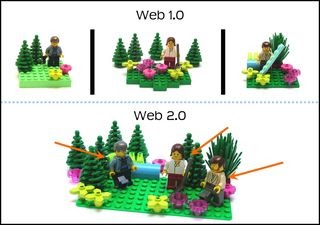
Gauntlett’s theory highlighted the difference between web 1.0 and 2.0


Gauntlett argues that new media erodes the boundary between producer and audience.
‘We media’ (we are the media)
Two way process

‘Prosumers’  (what new media technologies allow the audience to become prosumers? 


He uses the analogy of the garden and allotment; web 1.0 is a garden and web 2.0 is the allotment where audiences can share, edit and create material online. 


Non diegetic and diegetic sound: what's the difference?

Diegetic sounds are the sounds that belong naturally with what can be seen in the picture, e.g. there is a dog in the street and there is the sound of a dog barking.

Non-diegetic sounds are the sounds that do not come from anything that can be seen in the picture, e.g. musical score for the film or a voiceover.


Sound has the power to create
certain mood, can be associated with
a character
 and can signal events
that are about to happen.


Watch this film clip, what diegetic and non diegetic sounds are used and why
What atmosphere does the sound create? Also consider camera shots and movement